When it’s time to create or redesign a website, responsive web design isn’t one consideration among many anymore. It’s the starting point. Most of your visitors are now on a phone, and Google ranks your site based on how it performs there. Our web design team builds every site responsive by default, and here’s why yours should be too.
What is Responsive Web Design
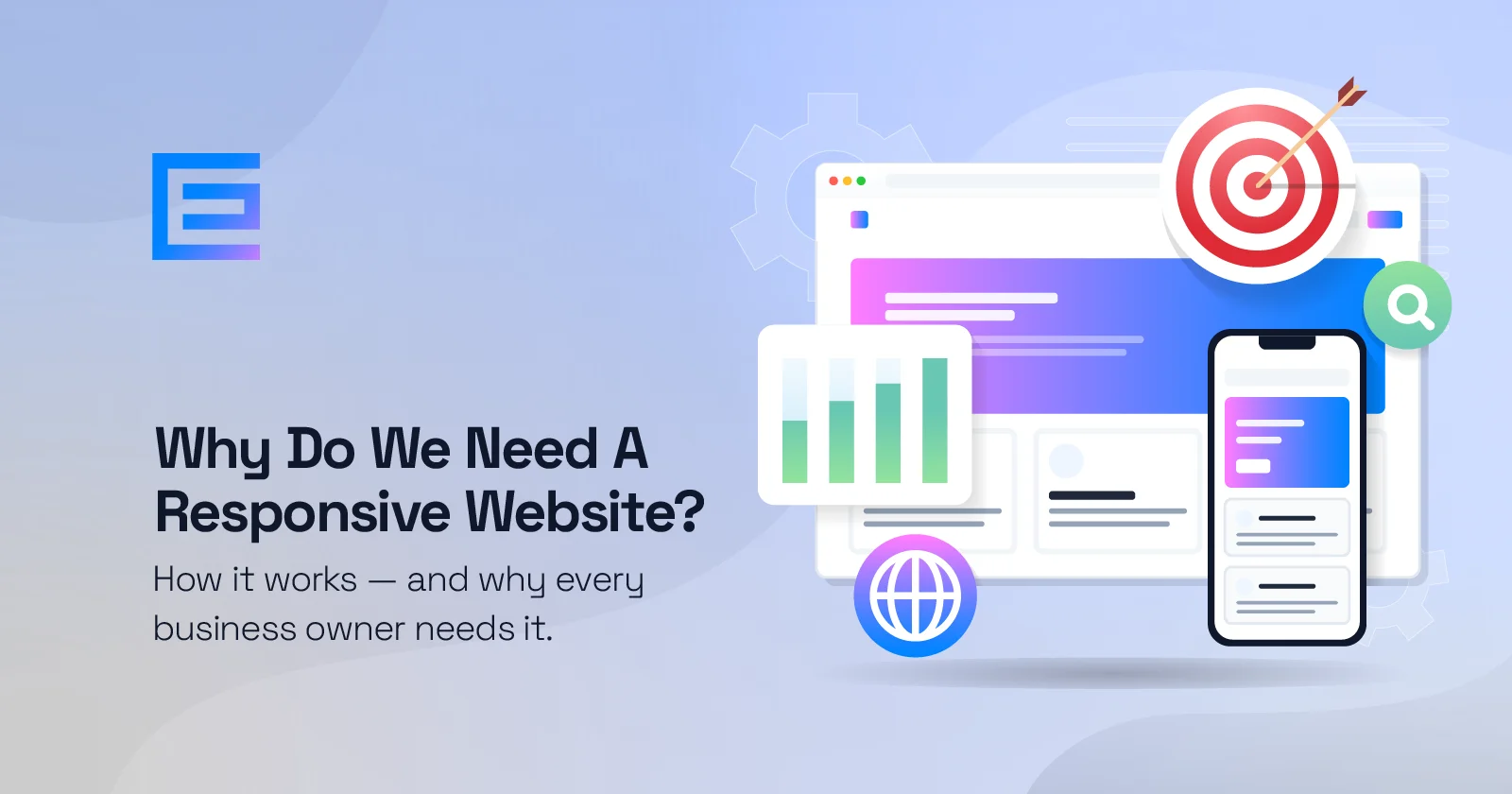
Responsive web design means your website automatically adapts to the screen it’s viewed on. One site, one set of content, and the layout adjusts to fit a phone, tablet, laptop, or desktop monitor without losing content or quality. Visitors get easy navigation and a full experience no matter what device they’re using.
Mobile Is the Majority of Your Traffic
When this post was first written, mobile devices accounted for less than 20% of web traffic. Today, mobile devices generate roughly 64% of all global website traffic. In North America, mobile accounts for about 57% of visits, and for local service businesses the numbers run even higher. Restaurants and home service companies often see 70 to 80% of their visitors on a phone, usually in a high-intent moment: finding somewhere to eat, calling a plumber, requesting a quote.
If your site is hard to use on a phone, you’re failing the majority of your audience, not a niche segment.
Google Ranks Your Mobile Site, Not Your Desktop Site
This is the part most business owners miss. Google now uses mobile-first indexing, which means it crawls and ranks the mobile version of your website. Your desktop site can be flawless, but if the mobile experience is broken, slow, or missing content, that’s what determines where you rank. A responsive site guarantees Google sees the same complete content your desktop visitors do.
Benefits of Responsive Web Design
A good mobile experience keeps visitors on your site longer and turns more of them into leads and customers. Mobile users bounce quickly from sites that make them pinch, zoom, and hunt for a phone number.
Responsive design also saves time and money. You build and maintain one website instead of separate desktop and mobile versions, and every update happens in one place. And, it consolidates your SEO: one URL for all devices means all your traffic, backlinks, and authority point to a single site instead of being split across versions.
Simply put: having a responsive website is critical and of the utmost importance. Without it your business is losing leads and wasting money.
Does Your Website Need an Upgrade?
Tags: Digital Marketing • Web Design

Richard Horvath
Richard Horvath is the founder of TheeDigital, a Raleigh based award-winning web design and digital marketing agency. He is proud of his team and the results that they provide to their clients.