
Think back: when did you last look up a local business, click through to their site, and comb through details? Chances are, you just checked their hours, read a few reviews, maybe glanced at some photos, or called them, all without ever leaving Google. That information comes straight from their business profile.
Previously called Google My Business, Google Business Profile appears in Google Search and Maps, giving customers a quick snapshot of the business before they decide to call, visit, or keep searching.
For business owners, this means your profile can’t just be a list of your phone number and address. It needs to be accurate, updated, and actually helpful.
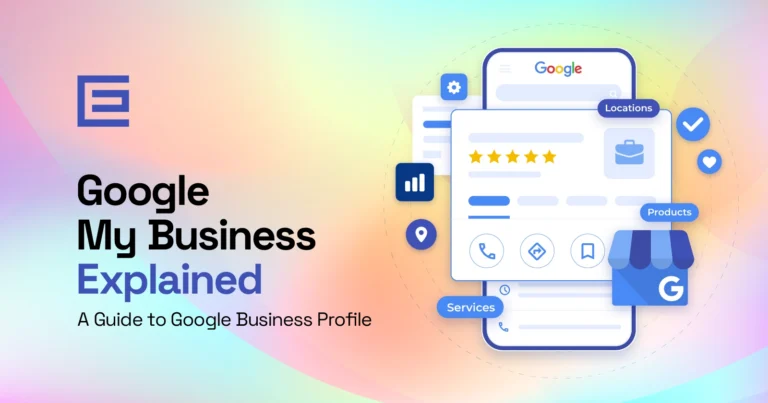
Setting Up Google Business Profile
Setting up a Google Business Profile isn’t too complicated, although some steps may look different depending on the type of business.
Here’s how the process works:
- Sign in and enter your business name: Go to Google Business Profile and sign in with the Google account you want to use. Enter your business name to begin. If Google finds an existing profile, you may be able to claim it or request access from the current owner.
- Choose your business type: Select every option that applies to your business: online retail, local store, or service business. You can choose more than one.
- Add your website and business category: Enter the website you want customers to visit, then choose the category that best describes your business’s main focus.
- Add your location and contact details: Enter your business address, location, and phone number. The exact information Google asks for may depend on whether customers visit you, you travel to them, or both.
- Complete verification: Google will ask you to prove that you are connected to your business. The available methods may be a video, phone call, text, email, or postcard. Google decides which options appear, and some businesses may be asked for more than one step.
- Fill out the rest of the profile: Add your business description, services, products, photos, booking links, and any other details that apply to your type of business.
- Give everything one last look: Check the hours, address, map pin, phone number, website, and services before you move on. It’s easier to fix a mistake now than after a customer finds it.
Tips for Completing Your Business Profile
- Keep the basic information the same everywhere: Your business name, address, and phone number should match what appears on your website and other major listings. When the details are different, customers likely won’t know which version is current.
- Use the name customers already know: Add your business name as it appears on your signs, website, and other branding. Leave out extra cities, services, slogans, or sales language unless they are part of the actual name.
- Choose categories that fit your business: Start with the category that best describes your main service. Add secondary categories only when they clearly apply to something you offer.
- Keep the description easy to read: Tell people what your business does, who it serves, and where it works. There’s no need to repeat the same keywords or list every service and nearby city.
- Make it easy to leave a review: Send customers a direct review link after a purchase, appointment, or completed service instead of asking them to find the profile on their own.
- Use photos from your business: Add recent photos of the location, team, products, services, or completed work. They give customers a better idea of what they’ll actually see.
- Update the profile when something changes: Change the hours for holidays, temporary closures, or seasonal schedules. Check the rest of the profile after updating your phone number, website, services, or location.
Your profile doesn’t have to be flashy. Just give people what they need to decide if you’re right for them.
Optimizing Your Google Business Profile
Creating the profile is just the first step. You need to keep it accurate and useful.
When someone checks your profile, they should immediately see what you do, where you are, when you’re open, and how to reach you, without having to dig around.
Importance of Accurate and Complete Information
Start by checking the information customers are most likely to use: your business name, address, phone number, hours, and website.
Outdated details can cost you a customer. Someone may call an old number, arrive after you’ve closed, or click a booking link that no longer works.
Review your profile for:
- Regular business hours
- Holiday and special hours
- Address or service area
- Map pin
- Phone number
- Website
- Booking or appointment link
- Business categories
- Services and products
- Business description
- Photos
The same basic information should also be consistent across your website and any other major listings. The wording doesn’t have to match exactly, but your name, address, phone number, and website should.
Selecting the Right Business Category
Pick the category that most closely matches your core business.
For example, if most of your work is roofing, “Roofing Contractor” makes more sense than a broader category such as “General Contractor.” Secondary categories can also be added for other services, but should be used only when they actually fit.
Check on the categories every so often, since Google may add new options or rename existing ones.
Using Keywords in Your Business Description
Your description should naturally mention what you do, for whom, and where. Don’t repeat your main keywords ten times or list every suburb you serve; it just makes the description harder to read for potential customers.
Someone should be able to glance at it and quickly tell whether your business offers what they need.
Adding High-Quality Images and Videos
Add photos that give people a real look at your business.
The photos should match the type of business. A restaurant may show its food and dining area. A contractor may focus on recent projects and job sites. An office may include the entrance, reception area, staff, and parking.
Use your own photos whenever possible. People looking at the profile want to see the business they may actually visit or hire.
Managing and Updating Your Profile
Your profile isn’t a “set it and forget it” thing. Hours change, services get added, and people leave new reviews.
Google has also changed where those updates happen. Instead of using the old Google My Business dashboard, you can now manage a verified profile through Google Search or the Google Maps app.
How to Update Business Information
Sign in to the Google account connected to the profile, then open your business on Google Search or in Google Maps.
On Search, choose “Edit profile.” In the Google Maps app, tap “Business,” then “Edit profile.” The options may look a little different depending on your business and the device you are using.
From there, you can update your name, categories, address or service area, hours, phone, website, description, services or products, photos, opening date, and business attributes.
Not every profile will show the same fields. Some options are only available for certain types of businesses or in certain locations.
Keep in mind that some updates (like business name or address) may trigger new verification steps.
After making changes, check the public profile to make sure everything looks right. It’s also a good idea to review it every so often, since customers can suggest edits and Google may pull in information from other sources.
Responding to Customer Reviews
Don’t ignore reviews. They give you a chance to thank customers, clear up concerns, and show that someone in your company is paying attention.
For a positive review, keep the response short and mention something the customer brought up.
For a negative review, stay calm and avoid arguing in public. Do not share private details. If the issue needs a longer conversation, ask the customer to call or email.
Remember that future customers can read your response too. The way you handle a complaint can matter just as much as the review itself.
If a review breaks Google’s rules, you can report it, but they’ll only remove it if it’s truly against their policies.
Posting Updates and Offers on Your Profile
Google lets you post updates, offers, or events directly on your profile. You might share new products, current promos, holiday hours, recent jobs, or reminders.
To create a post, open your Business Profile, choose “Posts,” and then “Add post.”
Add a clear message and a next step (“call now” or “see more”), but keep it focused. Tell people what’s happening and what they should do next without turning the post into a long sales pitch.
Posts don’t replace your website, email, or social media; they give customers another place to find up-to-date information.
Using Google Business Profile for Local SEO
Google Business Profile is just one part of local Search Engine Optimization. It works alongside your website, reviews, business listings, local pages, and links from other websites.
A complete profile helps Google and customers understand your business, but doesn’t guarantee a top spot.
Understanding Local SEO and Its Importance
Local SEO focuses on searches for businesses, products, or services in a certain area.
Sometimes that’s specific (“family lawyer in Durham”), but often it’s vague (“dentist near me,” “pizza open now”). Google uses current location data to show local results.
Your business profile helps with that, especially when you keep the information, descriptions, and photos updated. But your website, accurate listings, good reviews, and links from relevant sites all support your local visibility.
How Google Business Profile Affects Local Search Rankings
Google uses relevance, distance, and prominence to decide which businesses appear in local results.
Relevance comes down to how closely the business matches what someone searched for. Your categories, services, and details help clarify that for Google.
Distance looks at how close the business is to the searcher or to the location included in the search. Precise address and service areas help here.
Prominence is tied to how established the business appears online. Reviews, links, and mentions all contribute.
A perfect profile alone won’t get you to the #1 position; competition and location matter, and you can’t pay Google to jump the line.
Encouraging Customer Reviews and Interactions
Reviews help others know what to expect.
Ask for a review after a purchase, appointment, or completed service, then follow up with a direct link to the profile.
Google doesn’t allow businesses to offer discounts, gifts, or other rewards in exchange for reviews. You also shouldn’t cherry-pick only happy customers, tell people what rating to leave, buy reviews, or have employees review your business.
The best approach to ask for reviews is to make it a natural part of your conversations. And make sure to respond when someone leaves feedback, so customers can see that the profile is active and managed.
Advanced Features and Tools
Once the basics are done, there are a few other areas worth checking out.
The options won’t be the same for every business. What appears depends on the category, location, and features Google makes available for the profile.
Using Google Posts for Promotions and Updates
Google Posts let you share updates right on your Business Profile.
You can use them for things like promotions, events, new products or services, seasonal reminders, recent work, company news, or changes to your hours.
Depending on the post type, you may also be able to add a photo or video, a link, dates, a coupon code, or offer details.
The best posts are specific, timely, and to the point. A landscaper might let customers know that spring cleanups are open for scheduling. A restaurant could share a holiday menu, and a retailer might post about a weekend sale.
Understanding Performance Data
Your profile’s “Performance” tab (formerly called “Insights”) shows how people find you and what they do when they find you. Depending on your business type, you may see profile views, search terms, website clicks, calls, direction requests, bookings, and other actions.
The data can help you see whether people are calling, visiting your website, or asking for directions after finding your business. It can also show changes during busier seasons or after you update the profile.
Still, these numbers only tell you so much. Make sure to compare them with Google Analytics, Google Search Console, call records, bookings, and actual leads to see which profile visits turned into business.
Common Challenges and Solutions
Google Business Profiles can get messy. A listing may show the wrong information, a duplicate may appear, or you may find out that someone else already controls the profile.
Addressing Duplicate Listings
Duplicate profiles can show up after a move, name change, ownership change, or when someone creates a second listing by mistake.
The problem is that the information may end up split between the two. One profile may have the reviews, while the other has the correct address, hours, or phone number.
Search Google and Maps using the current business name, any old names, previous addresses, and phone numbers. It’s also worth checking common misspellings.
Before you remove or report anything, make sure you know which profile you want to keep. If the older listing has reviews or a long history, contact Google first. You may need to request access, report the duplicate, update an old location, or ask Google Business Profile support for help.
Getting Access to a Profile You Don’t Control
Sometimes a business owner finds out that someone else already manages their profile. It may have been set up by a former employee, previous owner, agency, or another Google account.
Start by requesting access through Google Business Profile. The current owner of the profile will be notified and given time to respond.
If they approve the request, you can begin managing the profile. If they deny it or don’t respond, Google may provide you with some other steps to verify that you are connected to the business.
Once you have access, review who’s listed as an owner or manager. Remove people who no longer need access to the account and make sure at least one current owner uses an account your business can keep long-term.
Navigating Google’s Guidelines and Policies
Google has rules about who can have a Business Profile and what can be added to it.
Don’t add extra keywords to your business name just to rank for more searches. Use the real name customers know. You also shouldn’t use an address that doesn’t belong to the business or create separate profiles for every service offered at the same location.
If you break their rules, you risk having edits rejected, features limited, or your profile suspended.
If you’re moving, changing the business name, opening another location, or switching to a service-area setup, make sure to check Google’s guidelines before making any updates.
If your profile gets suspended, review the information first and fix anything that may be causing the problem before submitting an appeal. Google may ask for documents that show your business name, address, or day-to-day operation.
Keep Your Google Business Profile Working for You
A Google Business Profile should change as your business changes. Keep the information current, check it after major updates, and make sure customers can still find what they need.
Common Questions About Google Business Profile
Update the profile whenever your hours, phone number, location, website, or services change. Check the public listing occasionally too, since Google may make updates based on information from users and other sources.
Yes. One Google account can manage profiles for several business locations. Businesses with a larger number of locations can use Business Profile Manager and business groups to keep them organized. Each location still needs its own accurate address, hours, phone number, and other details.
Yes. You can add owners and managers without sharing the login information for the main account.
Managers can edit business information, respond to reviews, and publish posts. Owners have additional control over access and can add or remove other users.
The profile helps Google understand what your business offers and where it’s located.
Local rankings are based mainly on relevance, distance, and how established your business appears. Results can change depending on what someone searches and where they are searching from.
Thank customers for positive feedback and mention something from their review when it makes sense.
For a negative review, stay calm, avoid sharing private details, and ask the customer to call or email if the issue needs more discussion. Verified businesses can reply publicly to reviews
Many edits are reviewed within around 10 minutes, but some can remain pending for up to 30 days.
Check the public profile after making a change to see whether it was accepted, is still pending, or wasn’t approved.
Need Help Improving Your Local Visibility?
Your Google Business Profile is only one part of how customers find you online. Your website, local pages, reviews, business listings, and search strategy all need to support each other. TheeDigital helps businesses improve their visibility in local search through local SEO, website updates, content, and other digital marketing services. Contact our team to discuss your Google Business Profile and the next steps to strengthen your local presence
Tags: Our Favorites • Online Reputation Management
Alana Topakian
Alana Topakian has a rich background in sales and marketing coordination. Her expertise lies in content creation, graphic design, data analytics, and strategic prospecting. With a keen eye for detail and a passion for storytelling, she excels in developing compelling content strategies and visually captivating graphics that drive engagement and growth.