

What Are Search Engines?
A search engine is a software system that helps users find information on the internet by crawling, indexing, and ranking content. Learn what a search engine is, how it works, and why it’s key to your site’s SEO success.

- What Is a Search Engine?
- Search Engine Basics: Key Components
- How Search Engines Work
- Types of Search Engines
- The Role of SEO in Search Engines
- How Do Search Engines Make Money?
- How Do Search Engines Personalize Results?
- Brief History and Evolution
- The Societal and Economic Impact of Search Engines
- Emerging Trends and Future Outlook
- Search Engine Basics: Common Questions
What Is a Search Engine?
At its core, a search engine is a software system designed to carry out web searches. It sifts through the World Wide Web to find specific information or websites based on user queries, typically entered as keywords or phrases. The results, often referred to as search engine results pages (SERPs), are then presented in an ordered list. The primary function of a search engine is to index and retrieve web content in a way that is most relevant and useful to the user’s query.
Understanding what a search engine is starts with recognizing its role as a gateway to the internet’s vast information. A search engine acts as a bridge between users and the digital world, making it possible to locate everything from recipes to research papers with just a few keystrokes. This fundamental process of what a search engine is has evolved to handle billions of queries daily, adapting to user needs and technological advances.
| Key Functions of a Search Engine | Description |
| Query Processing | Interprets user input and matches it to indexed content. |
| Relevance Ranking | Prioritizes results based on algorithms considering factors like keywords and user intent. |
| Result Presentation | Displays SERPs with snippets, links, and additional features like images or videos. |
Search Engine Basics: Key Components
Search engine basics revolve around a few core elements that make the magic happen. At the heart of what a search engine is lies its ability to crawl the web, index content, and rank results. These components work together seamlessly to deliver accurate, timely information.

The crawling process, a fundamental part of search engine basics, involves bots systematically exploring the web to discover new pages. Indexing then organizes this data into a massive database, ready for quick retrieval. Ranking algorithms evaluate relevance, ensuring the most useful results appear first. These search engine basics ensure that every query receives a tailored response, from simple facts to complex research.
| Component | Role in Search Engine Basics |
| Crawler | Discovers and collects web pages. |
| Index | Stores and organizes content for fast access. |
| Algorithm | Ranks results by relevance and quality. |
How Search Engines Work
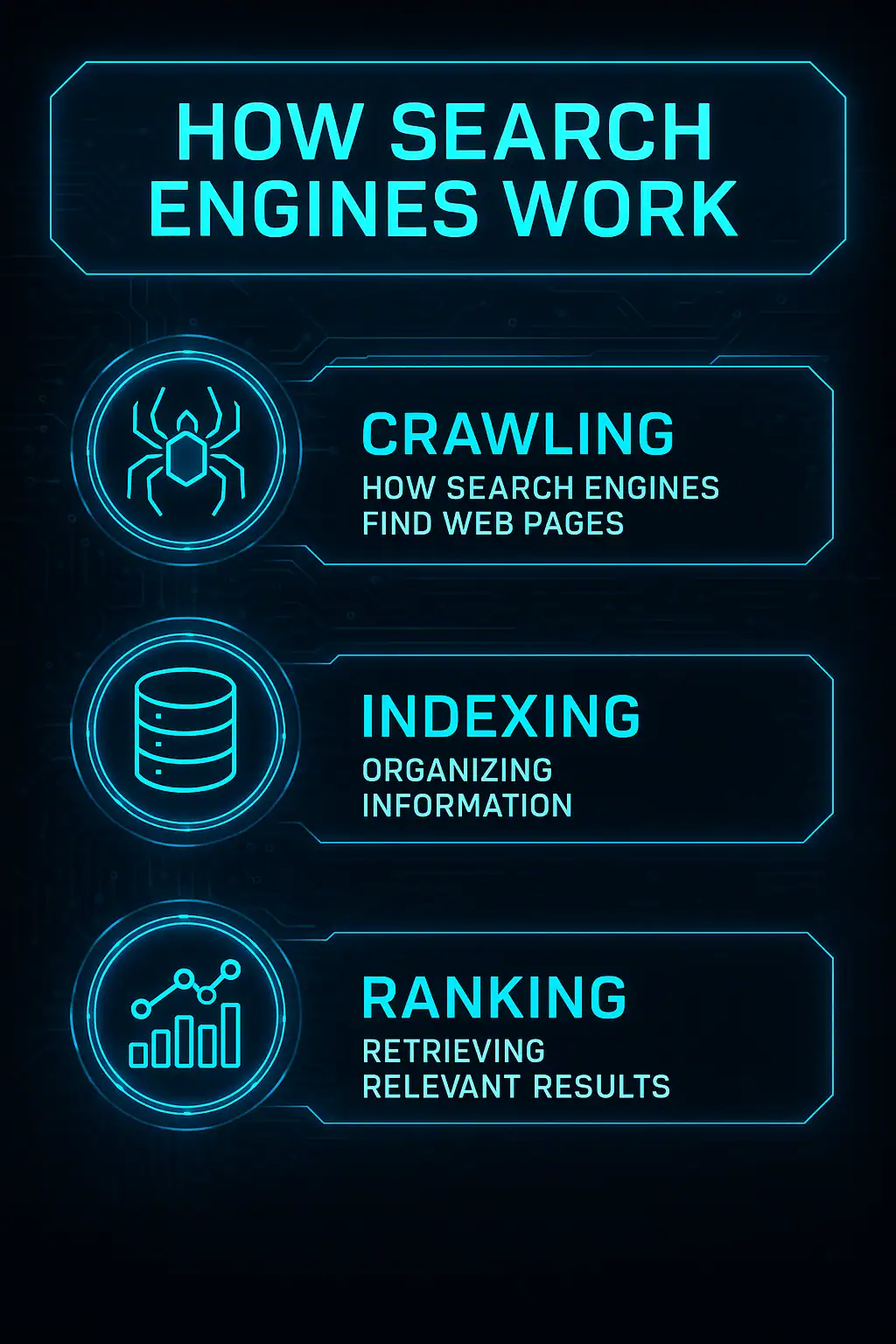
Understanding the mechanics of search engines is crucial to appreciating their capabilities and limitations. The process involves three key steps: crawling, indexing, and ranking.
Crawling: How Search Engines Find Web Pages
Crawling is the first step in the search engine process. Here, search engines deploy bots, often referred to as spiders or crawlers, to scour the internet for publicly accessible web pages. These bots follow links from one page to another, collecting data about each page they visit.
This crawling mechanism is essential to search engine basics, as it ensures the index stays current with new content. Without regular crawling, a search engine would quickly become outdated, missing the latest information users seek.
Indexing: Organizing Information
Once a page is crawled, it’s indexed. Indexing involves analyzing the content of the page and storing it in a giant database. During this process, search engines categorize each page based on its content, keywords, and other factors.
Indexing is a core part of search engine basics, allowing for rapid retrieval of information. A well-maintained index ensures that when you ask what a search engine is, the response is swift and accurate.
Algorithms: Ranking and Retrieving Results
The final step is ranking. When a user enters a query, the search engine retrieves the most relevant pages from its index using complex algorithms. These algorithms consider various factors, including the keywords, the quality of content, user location, and device type, to provide the most accurate and useful results.
Types of Search Engines
Search engines come in various forms, each serving different needs and preferences.

Traditional Search Engines
These are the most common types, with Google, Bing, and Yahoo being prime examples. They index a wide range of web content and are known for their comprehensive search capabilities.
Meta Search Engines
Meta search engines, like DuckDuckGo, aggregate results from multiple search engines and present them in a single interface. They are useful for getting a broader perspective on search results.
Specialty Search Engines
These are tailored for specific types of content or audiences. For example, PubMed is a search engine for medical research papers, while Behance is geared toward creative professionals looking for design inspiration.
The Role of SEO in Search Engines
Search Engine Optimization (SEO) plays a pivotal role in how content is discovered and ranked by search engines. SEO involves optimizing web content to rank higher in search engine results, making it more visible to users.
Understanding SEO
SEO encompasses a range of practices, from using relevant keywords to ensuring a website is mobile-friendly and fast-loading. The goal is to align with search engine algorithms to improve the visibility and ranking of web pages.
How SEO Affects Search Results
Effective SEO can significantly boost a website’s traffic by increasing its visibility in search results. However, it’s a constantly evolving field, with search engines regularly updating their algorithms to provide better user experiences and combat manipulative SEO tactics.
Basic SEO Strategies
Some fundamental SEO strategies include optimizing website speed, creating high-quality, relevant content, using appropriate keywords, and building backlinks from reputable sources. Staying updated with the latest SEO trends and algorithm changes is also crucial for maintaining high search rankings.
Brief History and Evolution
The genesis of search engines can be traced back to the early days of the internet. In the late 1980s and early 1990s, as the number of documents on the internet began to grow, there was a clear need for efficient search tools. The earliest forms of search engines were simple directories, such as the Archie Query Form, which indexed file names but not the contents of the files themselves.
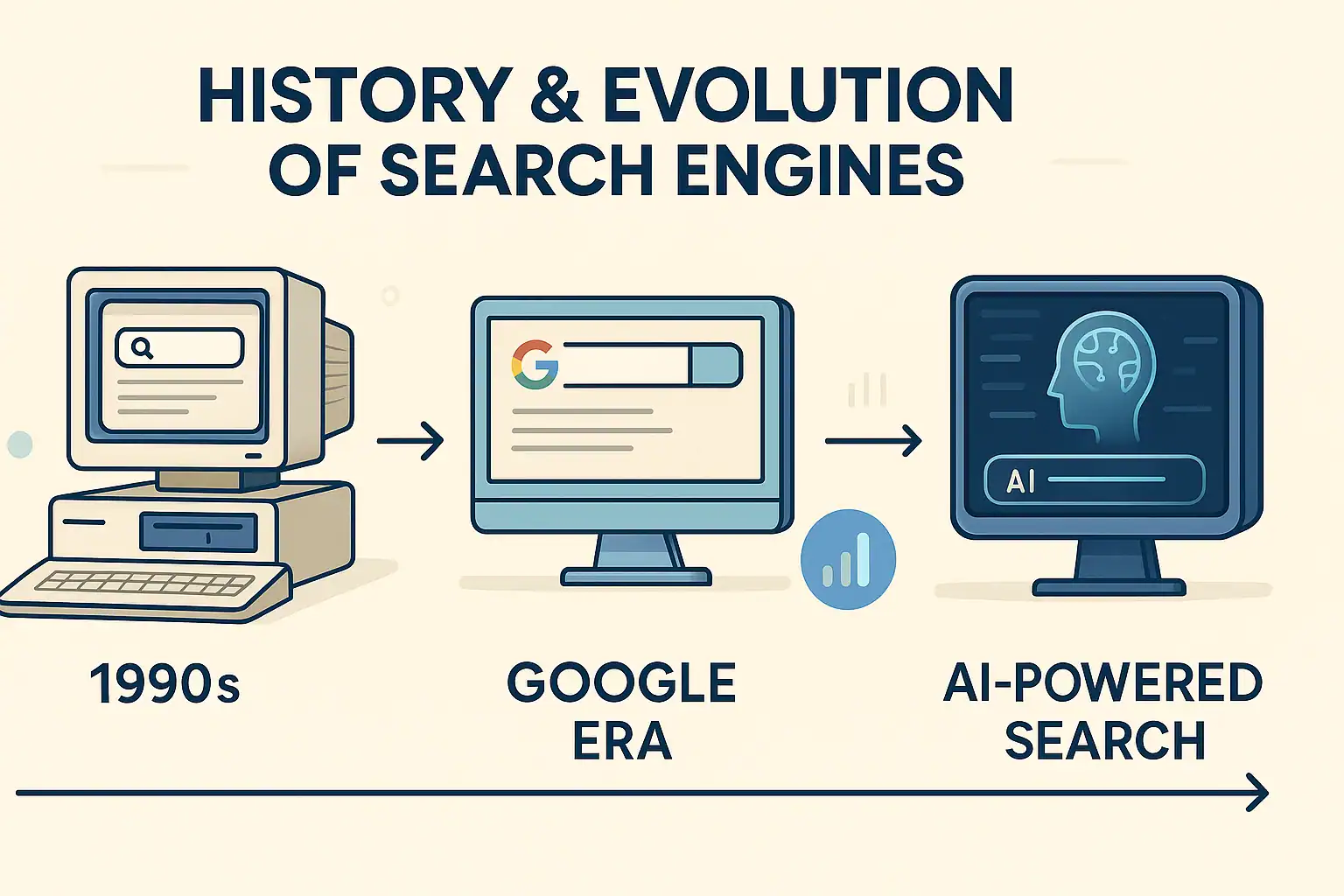
The mid-1990s saw the advent of the first true search engines, like AltaVista and Yahoo!, which began indexing the text of web pages. This period marked a significant evolution in search technology, with these engines using keywords to rank pages for relevance. However, the real game-changer came with Google’s introduction in 1998. Google revolutionized search engine technology with its PageRank algorithm, which ranked pages based on the number and quality of links pointing to them. This approach vastly improved the relevance and quality of search results.
Since then, search engines have continuously evolved, incorporating complex algorithms and artificial intelligence to enhance user experience. They have become more sophisticated in understanding user intent, contextual meaning of queries, and even the nuances of natural language. This evolution has not only made information retrieval more efficient but has also transformed search engines into powerful tools that influence various aspects of digital life, from commerce and education to social interaction and entertainment.
These tools are much more than mere gateways to information; they are the architects of the digital information landscape, shaping how we access, interact with, and understand the world of data around us.
The Societal and Economic Impact of Search Engines
Search engines have a profound impact on both society and the economy. They have democratized access to information, making it possible for anyone with internet access to find virtually any information they need.
Influence on Information Access
Search engines have made information more accessible than ever before. They have become the primary means by which people find news, research data, educational resources, and entertainment.
Impact on Businesses and Marketing
For businesses, search engines have opened up new avenues for marketing and customer engagement. Digital marketing strategies like SEO and pay-per-click advertising rely heavily on search engines to drive traffic and sales.
Emerging Trends and Future Outlook
The future of search engines is likely to be shaped by advancements in artificial intelligence and machine learning. These technologies are expected to make search engines even more efficient and intuitive, offering personalized search experiences based on individual user behavior.
AI and Machine Learning in Search
AI and machine learning enable search engines to understand and predict user intent more accurately, providing more relevant and personalized search results.
Voice Search and Mobile Optimization
With the increasing use of smartphones and voice-activated devices, search engines are adapting to understand and process voice queries. This shift is leading to a more conversational and natural search experience.
Search Engine Basics: Common Questions
A search engine is a software system designed to search for information on the internet. It crawls web pages, indexes content, and ranks results based on relevance to user queries.
A search engine works by crawling the web with bots, indexing the discovered content, and using algorithms to rank and retrieve results for user queries.
The main function of a search engine is to index web content and provide relevant results to user queries, helping users find information quickly and efficiently.
An introduction to search engines explains that they are tools for finding information online through crawling, indexing, and ranking, with examples like Google and Bing.
Search engine information refers to the data about how search engines operate, including their components, functions, and impact on digital marketing and SEO.
Facts about search engines include that Google processes over 8.5 billion searches daily, they use AI for better results, and they monetize through advertising.

Get a Free Website Audit
Fill out our form below or give us a call at 919-341-8901 to start the conversation.
Tags: Questions & Answers
Shyanna Kelley
Shyanna collaborates with sales on lead generation efforts and planning and developing compelling digital assets for TheeDigital.