Updated: May 2026
TheeDigital, a Google Ads management agency based in Raleigh, NC, has helped B2B companies across North Carolina generate high-intent leads through paid search since 2004. As AI tools like ChatGPT and Google AI Overviews increasingly answer informational queries before users ever click a result, the companies winning in 2026 are not the ones with the biggest budgets — they are the ones whose paid search strategy is built around intent, not volume.
Quick Answer: What Are the Best Google Ads Strategies for B2B Companies in North Carolina?
- The most effective Google Ads strategies for B2B companies in North Carolina in 2026 are: targeting high-intent, service-specific keywords rather than broad search volume; building separate campaigns per service with dedicated landing pages; using audience layering to filter out non-buyers; running remarketing campaigns across the full buying cycle; connecting Google Ads to a CRM like HubSpot for closed-revenue attribution; and applying geo-targeting by city to concentrate budget in Raleigh, Charlotte, and Greensboro markets that produce the strongest close rates. B2B buyers interact with a brand an average of 7 times before converting, paid search is the channel that stays visible throughout that entire journey.
The way people search for information online is changing quickly, we can all agree. AI-powered search experiences, large language models (LLMs), and Google’s AI Overviews are reshaping how users discover businesses and consume information online. For marketers, especially in the B2B space, this shift has created both new opportunities and new challenges.
For years, businesses invested heavily in educational content designed to capture top-of-funnel searches. A company could publish blog posts answering common industry questions, rank organically in Google, and gradually build trust with potential buyers long before they were ready to convert. Informational search traffic became a major part of many B2B marketing strategies because it helped establish expertise, brand familiarity, and long-term visibility.
Today, that landscape looks very different.

- The Impact of AI Overviews on Organic Search
- The Current State of LLM Advertising
- Why Google Ads Still Matters for B2B Companies
- Search Market Share and Why Google Still Wins for B2B
- Understanding the B2B Buyer Journey Before You Spend a Dollar
- Best Google Ads Strategies for B2B Companies in North Carolina
- Focus on High-Intent Keywords, Not Just Search Volume
- Build Campaigns Around Services, Not Just Keywords
- Use Conversion-Focused Landing Pages (Not Your Homepage)
- Leverage Remarketing to Stay in Front of Decision-Makers
- Better Targeting Through Audience Layering
- Lead Quality Matters More Than Lead Volume
- Why Geo-Targeting Matters for North Carolina B2B Companies
- Brand Protection Campaigns
- Competitor Conquest Campaigns
- CRM and Conversion Tracking to Measure Real Results
- Data Literacy Is No Longer Optional
- Expanding Beyond Google: When Bing and LinkedIn Make Sense
- Common Google Ads Mistakes B2B Companies Continue Making
- Frequently Asked Questions
The Impact of AI Overviews on Organic Search
Google’s AI Overviews are increasingly answering informational queries directly within search results. Instead of clicking through to websites, users can get summaries, recommendations, and explanations without ever leaving leaving the search engine results page.
As a result, many businesses are seeing declines in organic traffic for awareness-stage searches. According to Search Engine Land’s 2025 analysis, pages appearing in AI Overview citations saw up to a 34% reduction in direct click-through rates for informational queries. These “top-of-funnel” clicks may not have always produced immediate conversions, but they played an important role in brand exposure and expertise-building. Educational content still matters, don’t get us wrong, but it is becoming harder to rely on organic visibility alone to consistently attract new audiences.
This shift is especially significant for B2B companies, where buying cycles are long and trust-building is essential. Losing visibility during the research phase can make it harder to stay top-of-mind with future buyers.
The Current State of LLM Advertising
At the same time, advertising within AI platforms is still in its infancy.
While companies like OpenAI and platforms such as ChatGPT have explored limited advertising pilots and monetization strategies, the ecosystem around LLM advertising remains extremely early-stage. Most AI tools are not yet designed to deliver the kind of predictable, scalable lead generation that B2B companies depend on.
There is also growing discussion around how much search behavior AI tools may eventually pull away from traditional search engines like Google and Microsoft Bing. While AI-assisted search is growing quickly, traditional search engines still dominate commercial and transactional search behavior, particularly for high-intent B2B queries. Many users may use AI tools for research, brainstorming, or quick answers, but when it comes time to evaluate vendors, compare services, or request quotes, search engines remain the primary destination.
Why Google Ads Still Matters for B2B Companies
Despite all of these changes, Google Ads continues to dominate one area that matters most to B2B companies: high-intent lead generation. When someone searches for “commercial roofing company Raleigh” or “managed IT services Charlotte,” they are not casually browsing content. They are actively looking for a solution. That difference is critical.
Social media platforms can be extremely effective for brand awareness and audience targeting, but search remains the channel where buying intent is strongest. Someone scrolling through LinkedIn, Facebook, or Instagram may notice an ad, but they are often not actively searching for a service at that moment.
Search advertising works because it aligns directly with intent. A well-structured Google Ads campaign allows businesses to appear in front of decision-makers precisely when they are evaluating providers, researching solutions, or preparing to make a purchase decision.
For B2B companies navigating an increasingly fragmented digital landscape, that level of intent is still incredibly valuable. AI may be changing how people discover information, but Google Ads remains one of the most effective ways to capture demand from buyers who are ready to take action.
Search Market Share & Why Google Still Wins for B2B
Even as AI search tools continue growing, Google still controls the overwhelming majority of commercial search behavior. More importantly, B2B buyers still rely heavily on search engines throughout nearly every phase of the buying process, and that process is rarely simple.
B2B purchases tend to involve multiple stakeholders, longer sales cycles, internal approvals, and higher financial risk. A company investing in cybersecurity services, industrial automation software, or enterprise marketing support is not making an impulse purchase. Buyers spend time researching their options, comparing providers, evaluating pricing structures, and looking for evidence that a company understands their industry.
Search plays a role in every step of that journey, from awareness to consideration, to decision.
Early on, prospects may search for symptoms of a problem:
- “why is our website traffic dropping”
- “how to improve warehouse efficiency”
- “why are our Google Ads expensive”
Later, they move into solution-oriented searches:
- “best CRM for manufacturers”
- “PPC agency for healthcare companies”
- “managed IT support pricing”
Eventually, searches become highly transactional:
- “HubSpot partner Raleigh”
- “commercial HVAC contractor Charlotte”
- “Google Ads management North Carolina”
That progression is why intent matters so much in B2B advertising. The closer a search gets to a purchasing decision, the more valuable that traffic becomes.
Understanding the B2B Buyer Journey Before You Spend a Dollar
One of the biggest mistakes businesses make with Google Ads is treating every search the same way. In B2B marketing, the buyer journey is rarely immediate. Most prospects move through several stages before they are ready to contact a company, request a proposal, or schedule a consultation.
Strong PPC campaigns are built around understanding where a user is in that journey and aligning keywords, ads, and landing pages accordingly.
Step 1: The Buyer Realizes They Have a Problem
At the beginning of the journey, most users are not searching for a company yet. They are trying to understand a problem, identify pain points, or figure out why something is not working.
A business owner searching “what causes slow website performance” is not necessarily ready to hire an agency today. They are researching symptoms, learning terminology, and exploring possible solutions.
These awareness-stage searches are valuable because they introduce your company early in the decision-making process. Educational content and informative landing pages can help position your business as a knowledgeable resource before competitors even enter the conversation.
However, these searches also tend to be broader and less conversion-focused, which means they should be approached carefully within a paid advertising strategy.
Step 2: The Buyer Begins Comparing Solutions
Once prospects better understand their problem, their searches become more specific. Instead of researching the issue itself, they start evaluating different services, providers, or approaches.
This is the consideration stage.
A user may search terms like:
- “best CRM for manufacturing companies”
- “SEO agency for law firms”
- “managed IT services vs in-house IT”
At this point, buyers are actively weighing options and looking for expertise within their industry or niche. Search intent becomes much stronger because the user is no longer casually researching. They are trying to determine which solution fits their business needs.
For B2B companies, this is often where highly targeted campaigns begin outperforming broader awareness campaigns.
Step 3: The Buyer Is Ready to Hire
Decision-stage searches are where some of the highest-value Google Ads opportunities exist because the buyer is actively looking for a provider.
These searches are usually highly specific and often include service categories, industries, geographic modifiers, or commercial intent language:
- “commercial electrician Raleigh”
- “manufacturing SEO agency”
- “HubSpot onboarding services NC”
Searches that include modifiers like “pricing”, “consultation”, “services”, “company”, and “near me” often signal that the user is much closer to making a purchase decision.
At this stage, the goal is no longer education. The goal is conversion. Your ads, landing pages, and calls-to-action should focus on trust, credibility, expertise, and making it easy for prospects to contact your team.
Step 4: Filtering Out the Wrong Traffic
One of the most overlooked parts of the B2B buyer journey is recognizing who isn’t a qualified lead.
Many businesses waste significant budget targeting broad, high-volume keywords simply because the search volume looks appealing on paper. Unfortunately, broad traffic often produces low-quality leads and poor conversion rates.
Without proper targeting and exclusions, campaigns can attract:
- Students researching assignments
- Job seekers
- DIY users
- Consumers looking for B2C services
- Users with informational intent only
This is why negative keywords are so important in B2B PPC strategy.
Best Google Ads Strategies for B2B Companies in North Carolina
Focus on High-Intent Keywords, Not Just Search Volume
One of the most common mistakes in B2B PPC advertising is targeting broad, high-volume keywords simply because they appear attractive on paper. More traffic does not automatically mean better performance.
Broad keywords often attract users who are researching casually, looking for DIY information, searching for consumer services, or browsing without serious buying intent. While these searches may generate clicks, they frequently produce poor lead quality and wasted ad spend.
B2B campaigns generally perform much better when keyword targeting becomes narrower and more intentional.
High-intent searches often include:
- Service-specific phrases
- “Service + location” keywords (e.g., “roof installation raleigh”)
- Industry terminology
- Commercial buying signals
Negative keyword strategy is equally important. Without proper exclusions, campaigns can unintentionally attract:
- Residential consumers instead of B2B buyers
- Students and researchers
- Job seekers
- DIY users
- Low-intent informational traffic
Negative keyword management helps filter out irrelevant traffic and protects your budget from clicks unlikely to generate revenue. While it is not the most visible part of campaign management, it is one of the most important factors in improving lead quality and long-term campaign performance.
The strongest B2B Google Ads campaigns are not built around generating the most traffic possible. They are built around attracting the right traffic at the right stage of the buyer journey.
Build Campaigns Around Services, Not Just Keywords
A surprising number of B2B Google Ads accounts are built around loosely organized “catch-all” campaigns. Different services, unrelated keywords, and broad ad groups all get lumped together into a structure that is difficult to optimize and nearly impossible to analyze properly.
Effective B2B PPC campaigns should be structured around services, not just keyword lists.
A commercial contractor, for example, should not run a single campaign containing roofing, siding, insulation, and waterproofing keywords all mixed together. Each service deserves its own campaign structure, ad messaging, landing pages, and reporting.
This organization improves more than just ad relevance. It improves Quality Score, lowers CPCs, increases conversion rates, and creates clearer visibility into business demand.
Well-organized campaigns also reveal patterns that many businesses miss. You may notice one service category consistently grows seasonally while another declines. Some cities may produce stronger lead quality than others. Certain industries may convert at significantly higher rates. Good campaign structure creates operational insight, not just advertising data.
Use Conversion-Focused Landing Pages (Not Your Homepage)
One of the fastest ways to waste ad spend is by sending paid traffic to a generic homepage. This is by far the most common mistake we see in B2B PPC ads.
Homepages are designed to serve many audiences at once. PPC landing pages should do the opposite. They should focus narrowly on a specific service, industry, or user intent. For B2B companies, specificity matters. Generic messaging rarely converts well because buyers want to feel understood.
So, what should your landing page look like? A strong page immediately communicates what the company does, who it helps, and why it is different.
Strong landing pages often include:
- Industry-specific messaging
- Client testimonials
- Certifications
- Case studies
- Clear calls to action
Most importantly, the next step should feel easy. Whether the goal is scheduling a consultation, requesting an audit, or booking a demo, the user should be able to convert directly from the page without unnecessary friction.
Leverage Remarketing to Stay in Front of Decision-Makers
Very few B2B buyers convert on the first click.
In B2C advertising, a consumer might see a product and make a purchase the same day. B2B purchasing decisions typically take much longer. There may be meetings, internal discussions, budgeting conversations, and multiple rounds of research before a decision is made.That is why remarketing is so important.
Remarketing allows businesses to stay visible after a prospect leaves the website. Depending on the industry, B2B buyers may interact with a company multiple times before converting. A prospect might discover your business through a Google search, read several blog posts over the following weeks, click a retargeting ad later, revisit your site through a branded search, and only then schedule a consultation. Compared to many B2C purchases, where the buying cycle can be much shorter and more impulsive, B2B campaigns often require far more trust-building throughout the funnel.
Remarketing Keeps Your Brand Visible Throughout the Buying Cycle
Effective B2B remarketing strategies typically segment audiences based on behavior and engagement level rather than treating all visitors the same.
For example, campaigns may target:
- General website visitors
- Users who visited key service pages
- Visitors who spent significant time on the site
- Users who downloaded a guide or resource
- Prospects who started filling out a contact form but did not convert
- Returning visitors who viewed pricing or consultation pages
These engagement signals often reveal how serious a prospect may be. Someone who spends several minutes reviewing service pages or case studies is usually much farther along in the buying journey than someone who bounced after a few seconds.
Messaging Should Change as Buyers Move Through the Funnel
One of the biggest mistakes businesses make with remarketing is showing the same message repeatedly regardless of where the buyer is in the decision-making process.
Strong B2B campaigns evolve messaging over time.
During the first interaction, ads and landing pages should focus primarily on education and problem-solving. At this stage, prospects are still researching and trying to understand their options. Content that demonstrates expertise and provides useful insights tends to perform best.
As users continue engaging with the brand, remarketing campaigns can shift toward differentiation and proof.
This is where businesses should begin emphasizing:
- Case studies
- Testimonials
- Industry-specific experience
- Certifications or partnerships
- Performance metrics and results
- Unique competitive advantages
By the time a prospect reaches later-stage remarketing audiences, the goal is no longer simply introducing the company. The goal is building confidence and reducing uncertainty before the buyer makes a final decision.
Better Targeting Through Audience Layering
Google Ads is no longer just about picking keywords and hoping the right people click.
Today, Google also uses audience data to help advertisers better understand who is searching, not just what they are searching for. This helps businesses show ads to users who are more likely to become qualified leads instead of wasting budget on irrelevant clicks.
Think of it this way: two people can search for the exact same phrase but have completely different intentions.
Someone searching “business cybersecurity solutions” could be:
- A student researching a school project
- A small business owner looking for help
- An IT manager actively comparing vendors
- A competitor researching the market
Keywords alone cannot always tell the difference. Audience targeting helps fill in those gaps. Google allows advertisers to “layer” audience information on top of keyword targeting. In simple terms, this means businesses can narrow their ads toward users who show behaviors associated with actual buying intent.
For example, Google can identify users who are:
- Actively researching certain business services
- Comparing vendors online
- Visiting industry-related websites
- Searching for competitors
- Showing signs they may be preparing to make a purchase decision
This is often called audience layering because advertisers combine multiple signals together instead of relying on just one targeting method.
Rather than saying:
“Show this ad to everyone searching this keyword,”
the campaign becomes:
“Show this ad to people searching this keyword who also appear likely to be in-market for this service.“
That distinction can make a major difference in lead quality.
Lead Quality Matters More Than Lead Volume
One of the biggest problems in B2B marketing is the obsession with vanity metrics. High click volume does not necessarily mean strong performance. Neither do cheap leads.
A campaign generating fifty unqualified leads is far less valuable than one generating five highly qualified opportunities that contribute to actual revenue. Unfortunately, many businesses stop measurement at the form submission stage and never connect advertising performance to real sales outcomes.
This is where proper tracking becomes critical.
Businesses need visibility into where leads came from, which campaigns generated revenue, which services convert best, and which channels consistently underperform.
Why CRM Integration Matters
For many B2B companies, the real sales process happens after a lead submits a form.
A prospect may schedule a consultation, speak with sales, go through multiple meetings, and close weeks or even months later. If Google Ads is only tracking the initial form submission, the campaign data tells only part of the story.
By connecting Google Ads with a CRM platform like HubSpot, businesses can track leads throughout the full sales cycle instead of stopping at the first conversion.
This allows companies to see:
- Which campaigns generate qualified sales opportunities
- Which keywords lead to closed revenue
- Which lead sources produce long-term customers
- Which campaigns attract low-quality or unresponsive leads
As a HubSpot Certified Partner, TheeDigital helps businesses connect marketing performance directly to CRM data, sales outcomes, and long-term revenue tracking.
Using Offline Conversion Tracking to Improve Campaign Performance
Offline conversion tracking takes this process even further.
In B2B marketing, many important actions happen outside the website itself on sales calls, with proposal approvals and signed contracts, and more.
When a lead is captured, a unique Click Identifier is created. This can then be stored in your CRM system, and—if they ultimately make a purchase—that conversion can then be imported back to Google Ads and associated with that unique ID.
Offline conversion tracking allows businesses to send this real-world sales data back into Google Ads. Over time, Google can use that information to better optimize campaigns toward the types of leads most likely to generate revenue, not just the people most likely to click.
Why Geo-Targeting Matters for North Carolina B2B Companies
For many North Carolina businesses, geography has a major impact on campaign performance.
Different cities produce different search behavior, competition levels, and lead quality. Campaigns targeting Raleigh may perform very differently than campaigns targeting Charlotte or Greensboro. Segmenting campaigns geographically allows advertisers to customize ad messaging, landing page content, and budget allocation.
For service-based businesses especially, localized targeting often improves efficiency and lead quality significantly. This also allows you to adjust bids based on actual performance by market.
By monitoring performance geographically, businesses can:
- Increase bids in high-performing markets
- Reduce spend in underperforming areas
- Shift budget toward locations with stronger close rates
- Prioritize regions with higher-value opportunities
This creates a more efficient campaign overall because the budget is concentrated where it produces the strongest business results.
Brand Protection Campaigns Help Defend Your Search Visibility
Many businesses assume that if someone searches for their company name, they will naturally click their website. In reality, competitors may be actively bidding on your branded keywords inside Google Ads.
That means a prospect searching directly for your business could still see competitor ads appearing above your organic listing. Brand protection campaigns are designed to defend against this.
These campaigns specifically target your own business name, branded services, and company-related searches to ensure your business maintains maximum visibility when users are already familiar with your brand. In many cases, branded campaigns generate some of the highest click-through and conversion rates because the search intent is already highly qualified.
Brand campaigns also provide valuable competitive intelligence. If competitors are consistently appearing on your branded searches, it may indicate that they are actively targeting your audience. Identifying these competitors allows businesses to respond strategically, whether by strengthening brand messaging, improving offers, or building dedicated competitor campaigns of their own.
For B2B companies especially, protecting branded search traffic is important because prospects are often comparing multiple vendors at once. Losing high-intent branded clicks to competitors can quietly erode lead volume over time.
Competitor Conquest Campaigns Allow You to Compete Strategically
Competitor conquest campaigns work alongside brand protection strategies by targeting searches related to competing businesses. In simple terms, this means showing your ads when users search for a competitor’s company name or services.
These campaigns can be highly effective because the prospect is already demonstrating commercial intent and actively researching providers in your industry. Rather than trying to generate awareness from cold audiences, competitor campaigns position your business directly inside an existing buying decision.
Successful competitor campaigns require far more strategy than simply bidding on another company’s name, and the landing page experience matters just as much as the ad itself.
Strong competitor campaigns typically use dedicated landing pages built specifically around each competitor or audience segment. These pages should clearly communicate:
- What differentiates your company
- Why a buyer should consider switching
- Industry-specific expertise
- Service advantages
- Unique processes or guarantees
- Relevant case studies or proof points
Creating unique landing pages for each competitor-focused ad group often improves relevance, conversion rates, and overall campaign performance.
Competitor campaigns also create a defensive advantage. If another company is targeting your branded traffic, conquest campaigns allow you to respond strategically and maintain visibility within the same competitive landscape.
Use a CRM and Proper Conversion Tracking to Measure Real Results
One of the biggest mistakes businesses make with Google Ads is stopping measurement at the form submission stage. A lead alone does not necessarily represent revenue. Some leads become qualified opportunities, some turn into closed deals, and others never respond at all. Without proper tracking, businesses cannot accurately determine which campaigns are generating actual business value.
This is why CRM integration and conversion tracking are so important in B2B marketing.
By connecting Google Ads with a CRM platform like HubSpot, businesses can track leads throughout the entire sales process instead of relying solely on surface-level metrics like clicks or form fills.
This creates visibility into:
- Where leads originated
- Which campaigns generated qualified opportunities
- Which keywords produced revenue
- Which services convert best
- Which campaigns consistently underperform
Over time, this data becomes critical for refining strategy and improving return on investment.
As a HubSpot Certified Partner, TheeDigital helps businesses connect marketing data, CRM reporting, and sales outcomes to create more accurate, revenue-focused advertising strategies.
Data Literacy Is No Longer Optional
Not comfortable with numbers, reporting dashboards, or analytics platforms? Unfortunately, modern B2B marketing does not leave much room to avoid them.
Platforms like Google Analytics 4 and Google Ads contain the information businesses need to make informed decisions about campaign performance, lead quality, and return on investment. Without regularly reviewing and understanding that data, companies can spend years making poor marketing decisions without realizing it.
Bad data, or no data at all, creates dangerous blind spots.
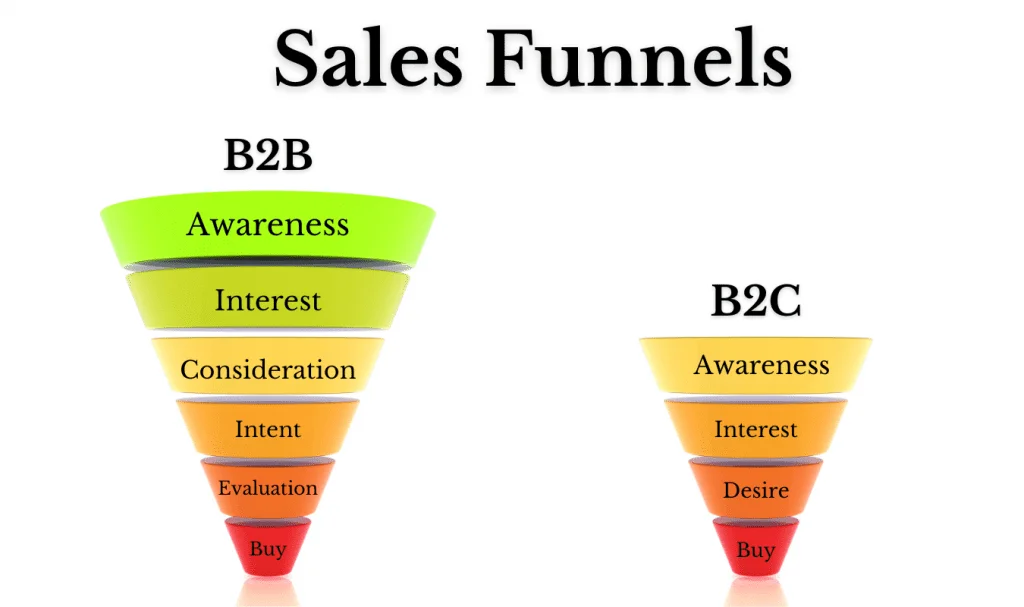
Image from: B2C vs. B2B Marketing | What’s the Difference?
Expanding Beyond Google: When Bing & LinkedIn Make Sense
Although Google Ads remains the dominant B2B acquisition channel, other platforms still have strategic value.
| Platform | Best For | Avg. CPC vs Google | Key Advantage | Key Limitation |
| Google Ads | High-intent, bottom-of-funnel B2B leads | Baseline | Largest search volume, strongest commercial intent | Higher CPCs in competitive B2B categories |
| Microsoft Ads | Enterprise/corporate decision-makers | 20–35% lower | Older, higher-income desktop demographic; less competition | Significantly lower search volume |
| LinkedIn Ads | Account-based marketing, brand awareness | 3–5x higher | Job title, company size, and industry targeting | High CPCs require precise targeting and clear objectives |
Microsoft Ads
Microsoft Ads often produces lower CPCs and attracts an older, more corporate demographic. While overall search volume is smaller, the platform can work well for businesses operating with limited budgets or targeting enterprise users.
LinkedIn Ads
LinkedIn Ads offers some of the strongest B2B targeting capabilities available today. Advertisers can target users by job title, industry, company size, and seniority level, making LinkedIn particularly effective for account-based marketing and awareness campaigns.
The tradeoff, of course, is cost. LinkedIn advertising is significantly more expensive than Google Ads, which means campaigns need strong targeting and clear strategic objectives to remain efficient.
Common Google Ads Mistakes B2B Companies Continue Making
Despite how powerful Google Ads can be, many businesses still struggle because of avoidable strategic mistakes.
Targeting Too Broadly
Broad targeting often creates irrelevant traffic and wasted spend.
Sending Traffic to Generic Pages
Homepages rarely convert as effectively as dedicated landing pages.
Ignoring Negative Keywords
Without negatives, campaigns attract low-quality traffic.
Measuring Success Incorrectly
Clicks and impressions are not business outcomes.
Misalignment Between Sales & Marketing
Marketing teams and sales teams must share visibility into:
- Lead quality
- Close rates
- Pipeline performance
- Revenue attribution
Frequently Asked Questions About Google Ads for B2B Companies
Google Ads for B2B companies work by placing paid search advertisements in front of users who are actively searching for the services or solutions your business offers. B2B Google Ads campaigns are most effective when they target high-intent, service-specific keywords, use dedicated landing pages instead of homepages, and connect to a CRM so that leads can be tracked through the full sales cycle to closed revenue, not just to the initial form submission.
B2B companies in competitive North Carolina markets typically invest between $3,000 and $20,000 per month on Google Ads depending on their industry, service area, and number of campaigns. The more important figure is not the monthly spend but the cost-per-qualified-lead and cost-per-closed-deal. B2B companies with proper CRM tracking and campaign structure consistently lower their cost-per-lead over time as campaigns accumulate performance data and optimize toward revenue-generating traffic.
B2B Google Ads strategy differs from B2C in three primary ways: longer sales cycles that require remarketing and multi-touch attribution, higher average deal values that justify higher cost-per-click for the right keywords, and buying decisions made by multiple stakeholders rather than a single consumer. B2B campaigns must account for the full buyer journey from awareness to vendor evaluation to final purchase, while B2C campaigns often optimize toward a single immediate transaction.
B2B Google Ads campaigns typically show initial performance data within the first 30 to 60 days, but meaningful optimization takes 90 to 120 days. This is because B2B sales cycles are longer than B2C, a lead that converts in month one may not close until month three or four. Campaigns connected to CRM data and offline conversion tracking improve more quickly because Google can optimize toward closed revenue rather than just form submissions.
B2B companies should use Google Ads as the primary lead generation channel because it captures buyers who are actively searching with high intent, and add LinkedIn Ads as a secondary channel for account-based marketing and brand awareness. Google Ads typically produces a lower cost-per-lead than LinkedIn, which averages 3 to 5 times higher CPCs. LinkedIn is most effective for top-of-funnel awareness campaigns targeting specific job titles, industries, or company sizes rather than for direct lead generation.
The most important Google Ads metrics for B2B companies are cost-per-qualified-lead, lead-to-opportunity rate, cost-per-closed-deal, and revenue attributed to paid search, not surface-level metrics like click-through rate or cost-per-click. Clicks and impressions measure activity, not business outcomes. B2B companies that connect Google Ads to their CRM can track which campaigns, keywords, and ad groups are generating actual pipeline and closed revenue rather than just form submissions.
A Smarter Approach to B2B PPC in North Carolina
B2B buyers in North Carolina are actively searching for providers like you right now. TheeDigital builds Google Ads campaigns around high-intent keywords, conversion-focused landing pages, and CRM-connected tracking that ties ad spend directly to closed revenue.
To talk through your current PPC performance and what a stronger B2B strategy could look like, schedule a consultation by calling 919-341-8901 or filling out our contact form below.
Tags: Lead Generation • Google

Daniel Falco
Daniel is a digital marketing strategist at TheeDigital. He is an expert in digital advertising and small business marketing strategy, and he aims to fully understand his client’s business and industry to find unique competitive advantages.