

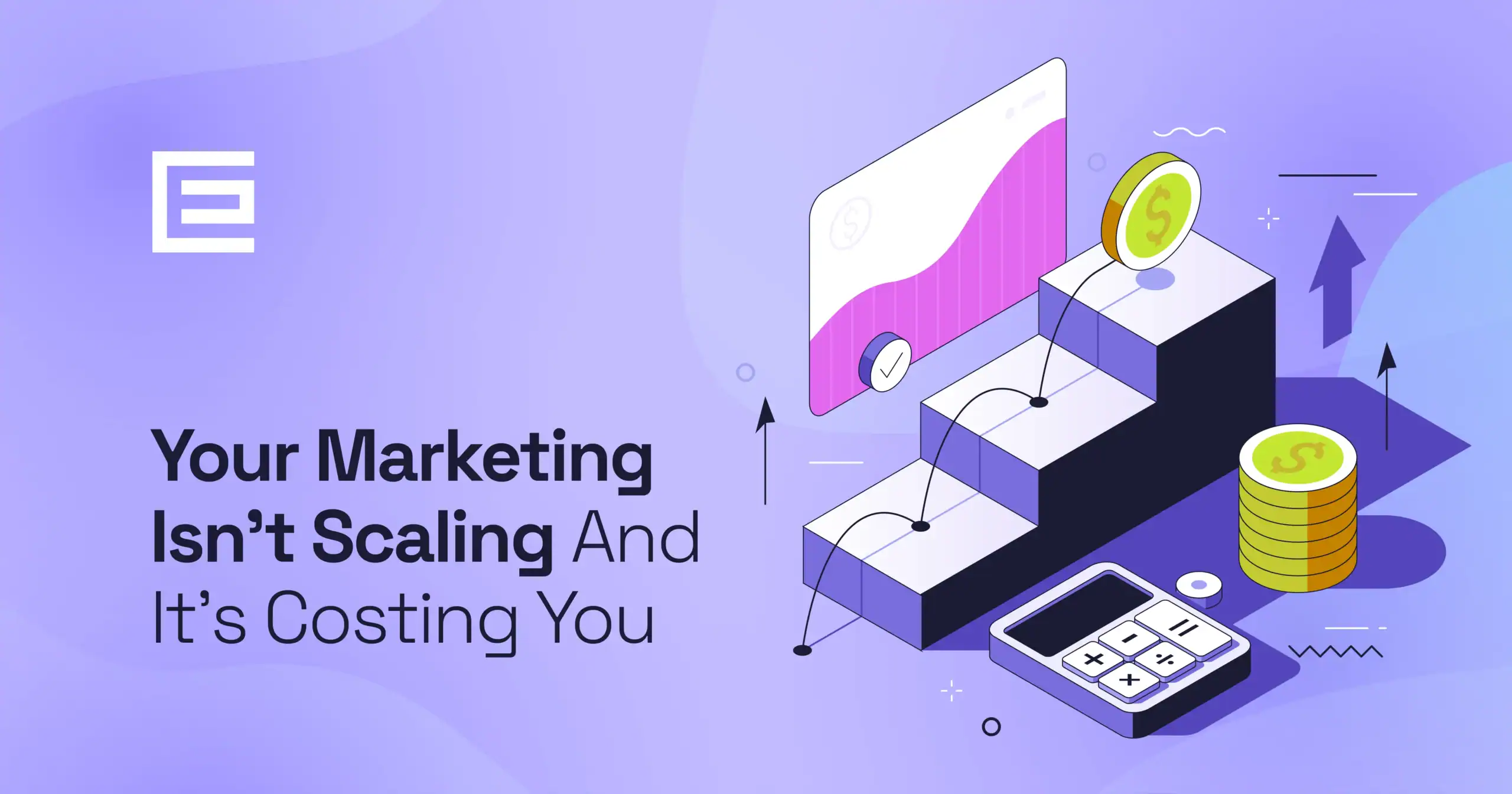
Scaling digital marketing isn’t usually where companies expect things to stall.
By the time most businesses reach this stage, the basics are already in place. SEO is running. Paid media is active. Content is being produced. There may even be an internal team or an agency involved. On the surface, everything looks right — yet growth slows, costs rise, and results become harder to explain.
The instinct is often to do more: increase budgets, add channels, launch new campaigns. But scaling rarely fails because of effort or spend. It fails because the systems that worked early on weren’t built to support growth. Established companies don’t struggle with digital marketing fundamentals — they struggle with alignment, infrastructure, and visibility as complexity increases.
- 1Scaling Marketing Isn’t About Doing More — It’s About Fixing What’s Broken
- 2Mistake #1 — Treating Channel Growth as Strategy
- 3Mistake #2 — Scaling Traffic Without Scaling Conversion Infrastructure
- 4Mistake #3 — Ignoring Attribution Until It’s Too Late
- 5Mistake #4 — Scaling Spend Faster Than Strategy
- 6Mistake #5 — Relying on Tactics Instead of Systems
- 7Mistake #6 — Misalignment Between Marketing, Sales, and Leadership
- 8What Scaling Digital Marketing Actually Requires
- 9How Established Companies Break Through Growth Plateaus
- 10Scaling Requires a Different Way of Thinking: A Path Forward
Scaling Marketing Isn’t About Doing More It’s About Fixing What’s Broken
In the early stages, tactics move faster than systems. A strong paid campaign, a few high-performing keywords, or a content push can drive results quickly. As growth continues, those same tactics are asked to carry more weight. Budgets increase. Traffic grows. Expectations rise. That’s when cracks start to show. Conversion paths become unclear. Reporting doesn’t line up. Teams operate in parallel instead of together.
Growth doesn’t create these weaknesses it exposes them. What worked at a smaller scale often isn’t built to support complexity, volume, or long-term performance. Without addressing the underlying structure, doing more only accelerates inefficiency.
For established companies, scaling digital marketing means shifting focus from execution to infrastructure. The question isn’t how to add more activity, but how to strengthen the foundation that activity depends on.
Mistake #1: Treating Channel Growth as Strategy
More Spend ≠ More Performance
When performance slows, the most common response is to invest more into the channels that previously worked. Paid media budgets increase. SEO efforts expand. Social content volume rises. At scale, this approach often delivers diminishing returns.
Paid media encounters fatigue as the same audiences see the same messages repeatedly. SEO growth slows as high-intent keywords become more competitive or already captured. Organic social reach declines as platforms prioritise engagement over visibility.
None of these issues mean the channels are broken. They mean the channel has reached the limits of what it can deliver without a broader strategy supporting it. Simply increasing spend or output doesn’t fix that it usually makes inefficiencies more expensive.
Mistake #2: Scaling Traffic Without Scaling Conversion Infrastructure
Driving more traffic often feels like progress until results stop improving. As companies grow, many continue using websites and funnels built for an earlier stage. Messaging stays the same. Conversion paths remain basic. The site was never designed to handle more complex buyers, longer decision cycles, or higher expectations.
When traffic increases, these gaps become expensive. Visitors arrive, don’t see themselves clearly reflected, and leave. Not because the channel failed but because the experience didn’t support the next step.
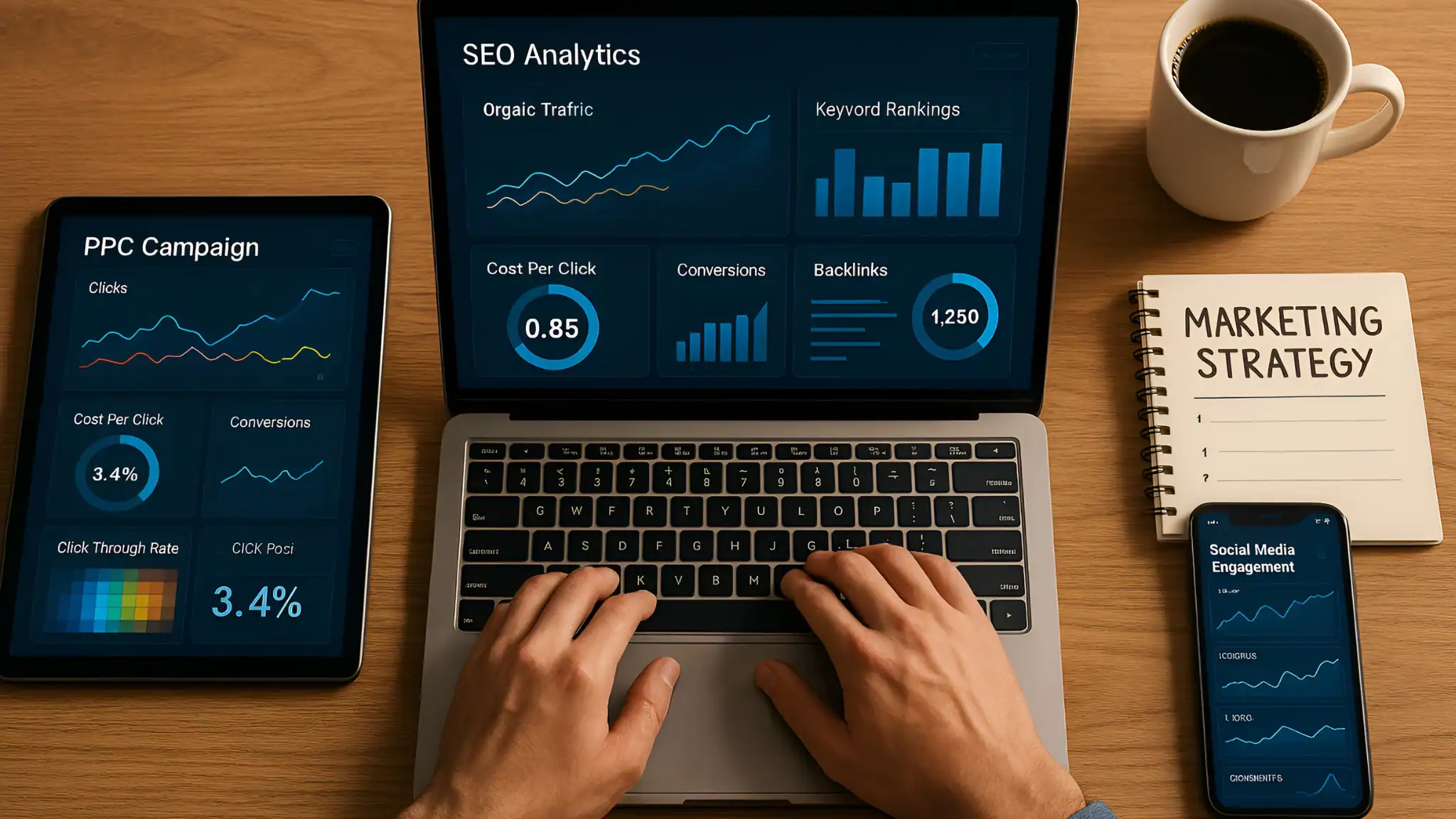
Higher traffic can also mask lead quality issues. More inquiries come in, but fewer turn into real opportunities. Sales teams spend time filtering instead of closing, and marketing performance becomes harder to justify.
At scale, conversion infrastructure matters as much as traffic itself. Without evolving how prospects are guided, qualified, and moved forward, growth slows no matter how many people arrive at the site, this disconnect makes it difficult to justify spend or improve performance meaningfully.
Mistake #3: Ignoring Attribution Until It’s Too Late
At smaller scales, unclear attribution is an inconvenience. At larger scales, it becomes expensive.
As marketing investment grows across channels, many teams reach a point where they can’t confidently explain what’s actually driving results. Each platform reports success differently, creating conflicting narratives and making it harder to allocate budget with confidence.
“We Don’t Know What’s Working” Becomes Expensive at Scale
Platform bias skews decision-making. Paid platforms favor their own metrics, last-click reporting oversimplifies complex buying journeys, and inconsistent reporting makes true performance comparisons difficult. Over time, spend follows what looks good rather than what produces revenue.
When this happens, optimization slows, and inefficiencies compound not because channels stop working, but because insight disappears.
Why Established Companies Outgrow Basic Analytics
As organisations scale, basic analytics setups no longer provide enough clarity. GA4 is often misconfigured or only partially implemented. CRM systems operate separately from marketing data. Revenue outcomes aren’t reliably connected back to campaigns or channels.
Without revenue-level visibility, teams are forced to make decisions based on assumptions instead of evidence. At scale, that lack of clarity limits growth more than any single tactic ever could.
Mistake #4: Scaling Spend Faster Than Strategy
When results slow, increasing budget often feels like the obvious next step.
At scale, this usually backfires. Without a clear strategy guiding where spend should go, more budget simply magnifies existing problems. Channels that were underperforming continue to do so, just at a higher cost. Messaging stays the same, audiences fatigue faster, and efficiency drops.
Established companies that scale successfully don’t expand spend first they reassess it. They reallocate, refine, and remove friction before increasing investment. Without that discipline, more budget doesn’t unlock growth it accelerates waste.
Mistake #5: Relying on Tactics Instead of Systems
Tactics can drive results quickly, but they rarely hold up as complexity increases.
At scale, growth depends less on individual wins and more on whether repeatable systems are in place to support them.
Campaigns Don’t Scale Systems Do
One-off successes don’t compound on their own. Without structured SEO systems, paid media frameworks, and content engines working together, performance becomes inconsistent and difficult to sustain. Teams end up chasing short-term wins instead of building momentum that carries forward.
The Absence of Process Limits ROI
Without a clear testing cadence, learning loop, or optimisation roadmap, improvement slows. Insights aren’t captured, mistakes repeat, and gains plateau. Over time, effort increases while impact stays flat.
Established companies scale when execution is supported by systems not when tactics are left to carry growth on their own.
Mistake #6: Misalignment Between Marketing, Sales, and Leadership
As companies scale, misalignment between teams quietly becomes a growth constraint. When each group is measured differently, performance may look strong in isolation while overall results stall.
Growth Stalls When Teams Chase Different Goals
Marketing focuses on lead volume. Sales prioritize speed and close rates. Leadership looks for revenue growth. When these goals aren’t aligned, teams optimize for their own success rather than shared outcomes. Leads move through disconnected paths, expectations clash, and accountability becomes unclear.
Alignment Is a Growth Multiplier
Established companies that scale successfully create alignment around shared KPIs, clear ownership, and revenue-first measurement. When teams work toward the same definition of success, decisions improve, handoffs tighten, and growth becomes easier to sustain. At scale, alignment isn’t a soft skill it’s a structural advantage.
What Scaling Digital Marketing Actually Requires
At scale, growth isn’t driven by more channels or more activity it’s driven by clarity.
That starts with a revenue-first strategy. Marketing efforts need to tie directly to pipeline and revenue, not just traffic or lead counts. When outcomes are clear, decisions get easier and waste gets exposed.
Funnel visibility becomes non-negotiable. Leaders need to see how demand turns into revenue and where momentum breaks down. Without that visibility, scaling turns into guesswork.
Coordination matters more than execution. Search, paid, content, and sales must work together rather than operate in silos. When channels support one another, performance compounds instead of stalling.
Finally, scale requires continuous optimisation and a partner that evolves alongside the business. What worked before won’t work forever and growth depends on the ability to adapt strategy as complexity increases.
How Established Companies Break Through Growth Plateaus
Breaking through a digital marketing plateau rarely starts with a new campaign. It starts with stepping back.
Established companies regain momentum by auditing what’s already in place not to assign blame, but to understand where performance has stalled and why. Strategic audits bring clarity to what’s working, what’s misaligned, and what no longer supports growth.
From there, infrastructure matters. Conversion paths, analytics, and workflows often need to be rebuilt to match the current scale of the business. Systems that worked earlier weren’t designed for increased complexity, volume, or longer buying cycles.
Platform alignment is another turning point. Search, paid media, content, CRM, and analytics must operate as a connected ecosystem rather than isolated tools. When platforms work together, insight improves and optimisation becomes easier.
At TheeDigital, growth is approached as a long-term investment, not a series of short-term wins. The focus stays on sustainable ROI building strategies and systems that continue to perform as businesses scale, rather than chasing temporary spikes in activity.
Scaling Requires a Different Way of Thinking: A Path Forward
When digital marketing stalls at scale, the issue usually isn’t effort or ambition, it’s structure.
Growth exposes gaps that were easy to ignore early on, from unclear attribution to disconnected teams and outdated conversion paths. Adding more budget or tactics only magnifies those problems.
Established companies break through plateaus by stepping back before scaling forward, rebuilding strategy around revenue visibility, alignment, and repeatable performance rather than isolated wins.
Sustainable growth comes from evolving systems to match scale, not doing what worked before, faster.
Scaling Feels Harder Than It Should?
TheeDigital works with established businesses to audit what’s in place, rebuild what no longer scales, and create marketing systems designed for long-term growth. Fill out the form below to talk with a digital consultant about where your strategy may need to evolve.
Fields marked with an asterisk (*) are required.
Your information is collected for the sole purpose of providing services described on this website.
Your private information is held in strict confidence. We will never release, share or sell your information to any other entities. We hate spam too!
Tags: Business • Digital Marketing